


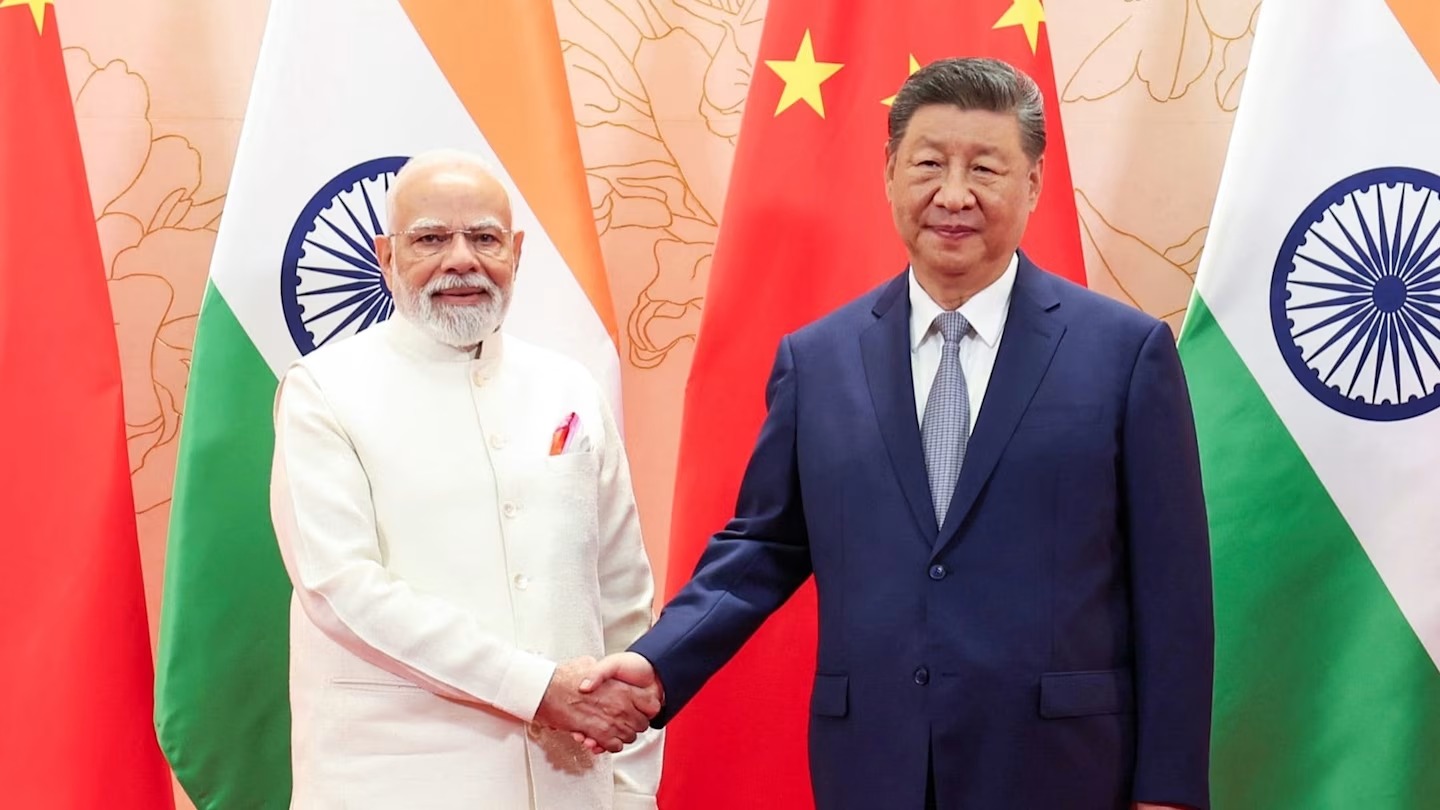
NEW DELHI/BEIJING, Sept 10 — Chinese President Xi Jinping’s expected visit to New Delhi this weekend could reinforce a gradual improvement in relations between China and India, but significant obstacles remain before that diplomatic progress translates into stronger commercial ties.
Xi’s trip, his first to India in seven years, is centered on the annual BRICS summit. China’s foreign ministry has confirmed his presence in Delhi, although it has not yet confirmed whether Xi will hold a bilateral meeting with Indian Prime Minister Narendra Modi. Such a meeting would be closely watched for indications of where relations between the two Asian powers are headed.
For companies operating between the two countries, however, the thaw has yet to remove several longstanding barriers. Regulatory restrictions, delays involving business visas and difficulties obtaining industrial equipment continue to complicate trade and investment, according to analysts and people familiar with the situation.
Relations between India and China have been marked by mistrust for decades. The countries fought a brief war in 1962, and tensions escalated sharply after a deadly border clash in 2020 in which 20 Indian and four Chinese soldiers were killed.
More recently, diplomatic engagement has improved, including after Modi visited China last year. Both governments are also navigating increasingly unpredictable relations with the United States, creating potential incentives for closer economic engagement.
“China certainly wants to improve ties, but we are waiting to see to what extent India is actually willing to improve them,” said Lin Minwang, a South Asia expert at Shanghai’s Fudan University and a former diplomat at the Chinese Embassy in New Delhi. He said expectations of a dramatic breakthrough should remain limited.
Harsh Pant, vice president at New Delhi-based Observer Research Foundation, said the two countries continued to face a substantial “trust deficit.”
At the same time, Pant said China’s economic strength could provide an opportunity for Beijing to position itself as a dependable partner, particularly as both countries face the impact of U.S. trade policies.
Investment restrictions ease, but major players remain cautious
India began loosening some restrictions on Chinese investment in March. The changes focused on areas including electronics, capital goods and solar cells, while the government has also been considering quicker approvals for certain joint ventures involving Indian and Chinese companies.
Several major projects have subsequently received approval. Among them was a smartphone manufacturing partnership involving India’s Dixon Technologies and Chinese handset company Vivo Mobile.
The easing, however, has not yet persuaded some of China’s biggest companies to revive shelved investment plans. Automakers BYD and Great Wall Motor, which had considered expanding manufacturing operations in India, put those plans on hold after facing increased scrutiny from New Delhi, according to an Indian government source.
Both companies declined to comment.
Chinese companies seeking to invest in India are also encountering greater scrutiny from Beijing, particularly where proposed projects involve sophisticated manufacturing or advanced technologies, according to two people familiar with the matter. Both requested anonymity because they were not authorized to speak publicly.
China’s foreign ministry said Xi and Modi view their countries as “partners, not competitors” and believe that each represents opportunities rather than threats to the other’s development.
India’s trade and foreign ministries did not respond to requests for comment.
Despite the broader diplomatic improvement, security concerns continue to influence commercial decisions. New Delhi has rejected a proposal from Alipay, an Ant Group-related platform, to connect with India’s instant payments system, citing national security considerations.
India is also considering a recommendation from its Serious Fraud Investigation Office for a detailed investigation into Xiaomi over alleged business irregularities and possible violations of foreign investment laws. Xiaomi has said it follows all applicable Indian laws and has not received any communication from the SFIO.
Visas and equipment remain points of friction
The reopening of some channels between the two countries has produced tangible improvements. Direct flights resumed last year, while India also eased visa procedures for Chinese business professionals.
Yet difficulties remain. Some Indian businesspeople with interests in China have recently experienced problems obtaining visas, according to an Indian source and an industry executive.
China’s foreign ministry said visas are issued to Indian nationals with a genuine need to travel to China in accordance with relevant laws and regulations.
Businesses are also facing delays involving Chinese-made machinery and components required for major Indian industries. Equipment destined for sectors including solar energy, electronics and infrastructure has been held at Chinese customs this year, according to the industry executive and two Indian sources.
In one case, large tunnel-boring machines required for infrastructure projects in India have reportedly remained held up for more than a year, an Indian government official said.
Ajay Srivastava, founder of New Delhi-based Global Trade Research Initiative and a former Indian trade negotiator, said the problems surrounding visas and industrial equipment appeared to go beyond routine administrative delays.
He argued that they demonstrated how China could use India’s dependence on Chinese trade and technology as leverage.
Still, a successful meeting between Modi and Xi could provide an opening to address some of these obstacles.
Anup Wadhawan, a former senior Indian trade official, said a meeting between the leaders would create opportunities to bring political and economic priorities into closer alignment.
“Of course, commercial ties are ultimately driven by the mutual economic interests of the citizens of both countries,” Wadhawan said. “Bilateral discussions can, however, work towards enabling these pathways to fructify.”
The outcome of any Modi-Xi engagement could therefore prove important not only for the broader diplomatic relationship but also for companies seeking greater certainty in one of Asia’s most consequential economic corridors.