


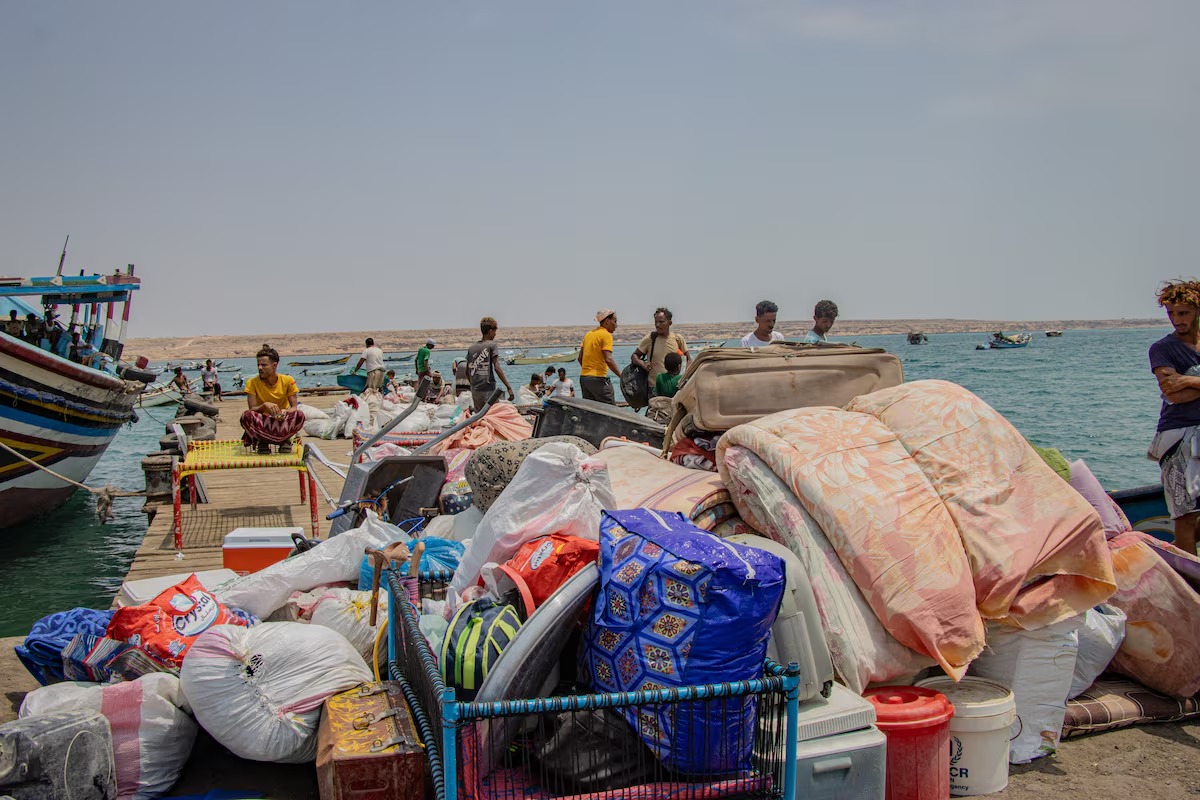
DUBAI/CAIRO, Sept 17 — Saudi Arabia and Yemen’s Iran-backed Houthis traded fresh cross-border attacks on Thursday as civilians fled renewed fighting by boat, adding another layer of risk to vital energy routes already disrupted by the wider Middle East war.
Houthi-controlled television reported Saudi airstrikes in Yemen’s Hajjah province near the Red Sea coast and around Taiz farther inland. Saudi authorities, meanwhile, said debris from an intercepted Houthi drone killed a Yemeni resident in the western city of Taif. The death was the first reported by Saudi Arabia since the latest escalation began. ([Al Jazeera][1])
Saudi authorities had previously reported more than 80 people wounded in Houthi attacks. The Houthis also claimed on Wednesday that they had brought down a Saudi F-15 fighter jet, although that claim was not independently confirmed. ([The Indian Express][2])
The conflict is also spilling into one of the world’s most important maritime energy corridors. Iran’s Revolutionary Guards Navy said a Togo-flagged oil tanker caught fire after being struck while attempting what it described as an “illegal passage” through the Strait of Hormuz. The vessel stopped after the fire, according to Iranian state media.
The latest escalation involving Saudi Arabia and Yemen threatens the Red Sea route used by Gulf energy exporters as shipping through the Strait of Hormuz remains severely constrained. Any prolonged disruption along both routes could put additional pressure on global oil markets.
U.S. President Donald Trump has rejected Saudi requests for direct military support against the Houthis. The group reached a ceasefire with Washington last year following a two-month U.S. bombing campaign.
Trump also said Thursday that he was nearing a major decision over whether to resume large-scale attacks on Iran.
“I have a big decision coming up. Do I want to go in and annihilate them or do I not? It’s a big decision. Anything could happen with me,” Trump said in an interview with Axios.
The comments come as energy costs remain elevated and the U.S. heads toward November’s midterm elections. Trump has previously threatened expanded military action against Iran without following through on those threats.
Global crude prices eased slightly on Thursday but remained above $100 a barrel after reaching their highest level since May. The average U.S. retail diesel price also climbed to a record, approaching $6.40 a gallon.
Washington and Tehran have not resumed negotiations aimed at ending the war since an interim agreement reached in June collapsed within weeks. The conflict is expected to feature in discussions at the United Nations General Assembly next week, while the U.S. State Department has said an Iranian delegation will be permitted to attend.
Yemen’s humanitarian crisis has deepened alongside the military escalation.
Fighting has pushed civilians toward the Bab el-Mandeb, the narrow maritime passage at the southern entrance to the Red Sea whose Arabic name translates as “Gate of Tears.”
In Djibouti, on the African side of the Red Sea, 50-year-old Wahida Omer described arriving by small boat after her village of Dhubab came under attack as Houthi forces advanced through the area. Her husband remained behind, and she said she did not know whether he was alive, dead or had been captured.
“The sea was frightening, difficult,” Omer said. She recalled passengers crying throughout the crossing and reaching shore without food.
The International Organization for Migration said more than 100,000 Yemenis had been displaced by the latest fighting, most of them within Yemen. By the following day, the figure had risen to at least 112,000 internally displaced, while nearly 3,000 people had crossed the sea to Djibouti, according to the UN migration agency. ([Reuters][3])
The Houthis say they have taken control of Yemen’s Red Sea coast in a rapid advance and accuse Saudi Arabia of carrying out hundreds of airstrikes in recent days.
Houthi leader Abdul Malik al-Houthi said the group wanted Saudi Arabia to end what he called its blockade and occupation of Yemen and halt military action against the country.
“We want the Saudis to cease their blockade and occupation of our country, and to stop their aggression against us. This is our demand!” he said in a televised speech.
The broader confrontation is unfolding alongside a standoff in the Strait of Hormuz, the strategic waterway linking the Gulf with the wider world. Before the war, roughly one-fifth of global oil and liquefied natural gas shipments passed through the strait.
The U.S. Navy has been attempting to help vessels navigate the waterway while Washington maintains a blockade of Iranian ports. Iran says the strait will remain closed until the U.S. blockade is lifted and is seeking an arrangement with neighbouring Gulf states under which it would collect fees from ships using the passage.
With fighting now affecting both the Red Sea and Gulf approaches, the conflict is creating simultaneous pressure on maritime trade, energy supplies and civilians fleeing Yemen. ([Reuters][4])