


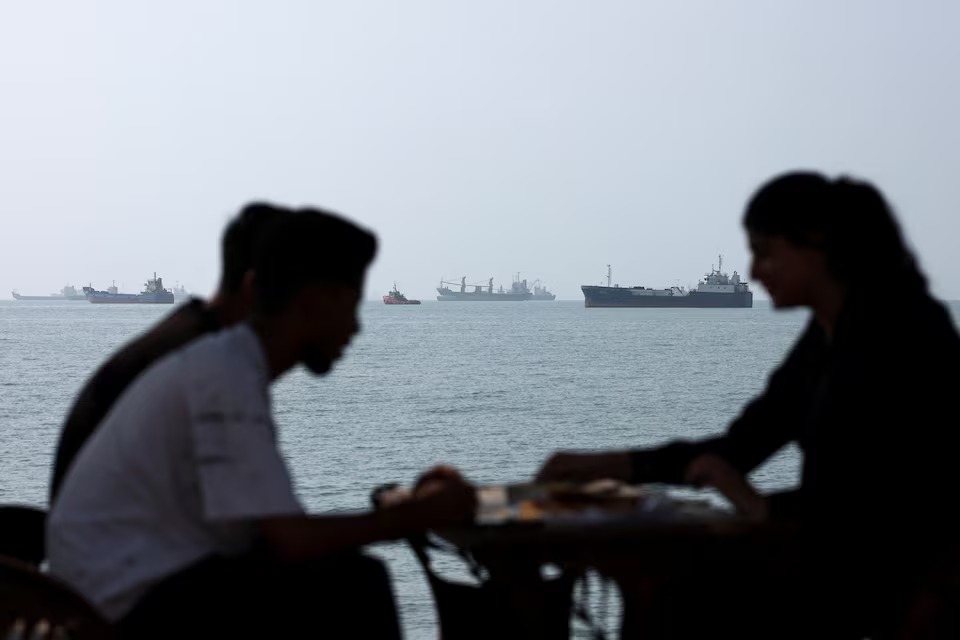
SINGAPORE [BE Report]: Brent crude climbed above $100 a barrel on Wednesday, marking the first time since July 24 that the international benchmark has crossed the psychologically important threshold as the escalating Middle East conflict raises fresh concerns over regional oil supplies.
Brent futures were up $2.15, or 2.2%, at $100.07 a barrel by 0721 GMT. U.S. West Texas Intermediate crude also advanced, gaining $1.70, or 1.83%, to $94.73 a barrel.
Oil prices have gained roughly 25% since the beginning of August as expectations for a lasting settlement to the six-month-old U.S.-Iran conflict have weakened. The latest escalation has added further pressure to an already disrupted energy market.
Attacks this week by Iran-backed Houthis on Saudi energy facilities set oil installations ablaze, raising concerns that the conflict could widen and further disrupt crude supplies.
The attacks also threaten shipments through the Red Sea, an important alternative route to the Strait of Hormuz. Oil flows through the strategic waterway have already been sharply reduced since the Iran war began on February 28.
The renewed supply concerns have prompted several major financial institutions, including Goldman Sachs, Bank of America and HSBC, to lift their forecasts for crude prices in recent days.
Before fighting resumed on August 30, an estimated 8 million to 9 million barrels per day had been moving through the Strait of Hormuz, according to Claudio Galimberti, chief economist at Rystad Energy. That represented roughly twice the volume recorded during the previous week. More recently, however, flows through the waterway have dropped below 2 million barrels per day.
Additional production from non-OPEC countries such as the United States, Canada and Guyana has provided some support to global supply. Even so, the International Energy Agency said last month that worldwide oil supply was expected to decline by 4.3 million barrels per day this year, equivalent to about 4%.