


NAIROBI [Business Emerge]: Kenya has introduced a temporary registration window for undocumented nationals from East African countries, seeking to ease fears of an impending crackdown on foreign-owned small businesses.
The move followed a rush of hundreds of Burundians to their embassy in Nairobi on Monday, where many sought travel documents amid uncertainty over their status in Kenya.
President William Ruto had last week directed authorities to shut down small-scale businesses run by foreign traders, with the trade ministry clarifying that the directive applied to foreigners operating without valid work permits. The announcement came after Ruto met Kenyan traders who had been protesting against tax reforms.
The directive triggered concern among some Burundians living and working in Nairobi. Several said they had faced threats from neighbours following the president’s remarks.
Despite the anxiety, there was no immediate indication of a government crackdown in Nairobi on Monday. A spokesperson for Ruto’s administration later said Kenya maintained an “absolute zero tolerance toward any form of harassment, intimidation, or xenophobia.”
The government urged undocumented nationals from other East African countries, particularly Burundians, to register formally with their respective embassies.
“For the duration of this designated registration period, all individuals undergoing registration will be presumed legally present in the Republic of Kenya. This window is designed to bring our brothers and sisters out of the shadows, ensuring they can access health, banking, and legal protections without fear,” the spokesperson said.
“This administrative regularization will be conducted in close coordination with our regional partners.”
Kenya is home to about 16,000 Burundian refugees and asylum seekers, according to the United Nations refugee agency. Many are engaged in small-scale commerce in Nairobi, including the sale of coffee and second-hand clothing.
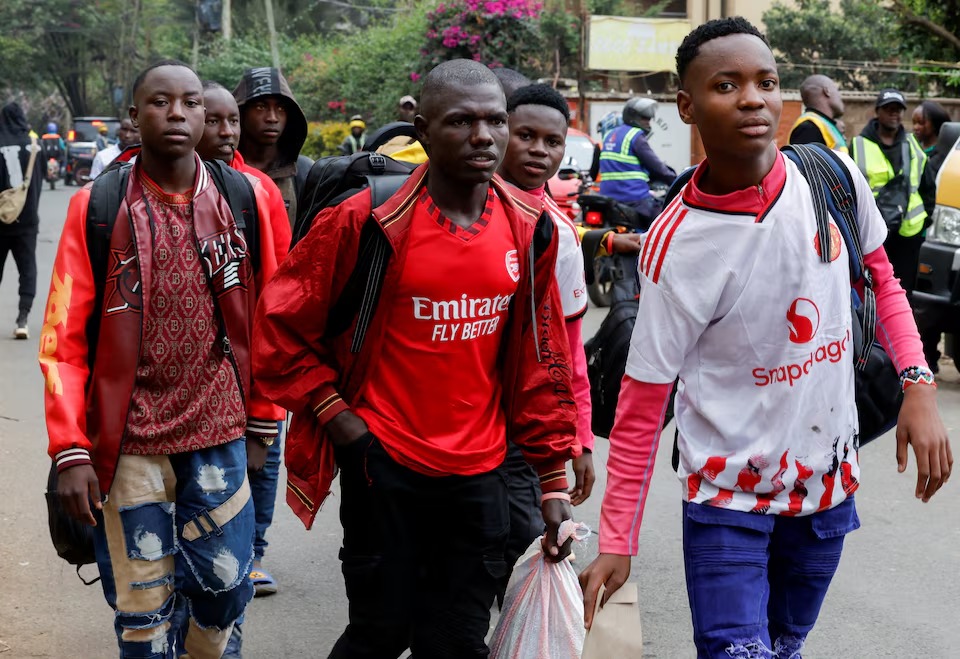
Long queues formed outside Burundi’s embassy on Monday morning as predominantly young men arrived carrying suitcases and other belongings.
Among them was 18-year-old Munezero Farnke, who said he had lived in Kenya for three years without an identity document and had planned to return to Burundi the following year.
“They should give us at least a week to plan and go back to Burundi or help us cross the border,” Farnke said.
Peter Nakumujango, 62, said the large crowd had been left uncertain about what assistance would be available.
“There are so many people who have come here and we don’t know when we will get any help. I am not going home by choice. I have been forced to go,” he said.
Burundi’s ambassador to Kenya was not immediately available for comment. Foreign Affairs Minister Edouard Bizimana also did not immediately respond to requests for comment.
The government’s stance toward foreign traders has drawn criticism from Ruto’s opponents, who accuse him of shifting blame for Kenya’s economic difficulties onto foreigners as he prepares to seek a second presidential term next year.
Activist Hanifa Adan recently wrote in the Daily Nation newspaper: “When a state runs out of answers for a collapsing economy, it invariably goes looking for an enemy.”
The latest developments come amid other government actions involving foreign businesses. On Thursday, Ruto ordered India’s Tata Chemicals to end its operations in Kenya, arguing that the company’s presence had not delivered sufficient benefits to the East African nation.
Tata Chemicals said it respected the Kenyan government’s authority and remained committed to constructive engagement.