


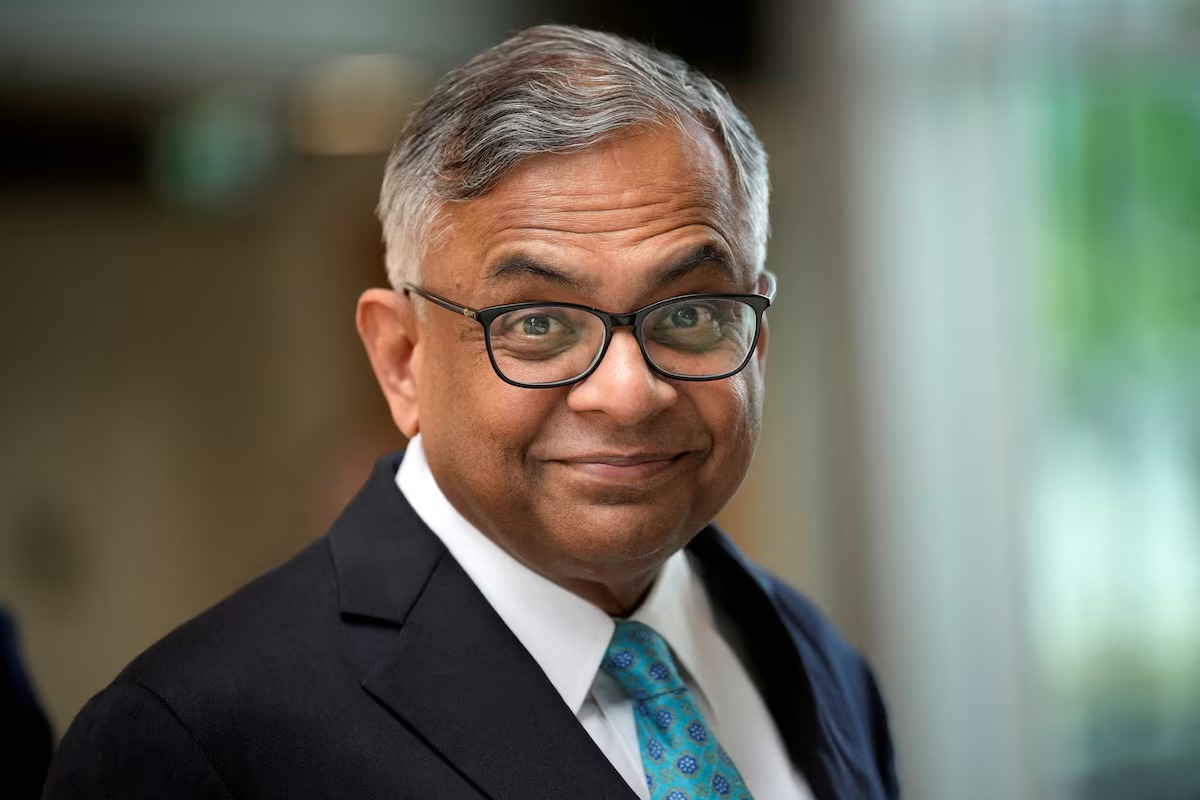
NEW DELHI, Sept 18 — Natarajan Chandrasekaran, who had appeared set to leave the Tata Group after nearly a decade at its helm, will remain chairman of Tata Sons for another five years, extending his leadership of one of India’s largest business groups at a time of growing internal tensions.
The board of Tata Sons, the holding company of the Tata conglomerate, approved a third five-year term for the 63-year-old chairman after Chandrasekaran reversed his earlier decision to step down when his current tenure ends in February 2027.
The decision, however, has exposed a sharp disagreement between the Tata Sons board and Tata Trusts, which collectively control 66% of the holding company.
Noel Tata, chairman of Tata Trusts and a prominent member of the Tata family, was the sole director to vote against Chandrasekaran’s reappointment. The Trusts have described the board resolution as a “legal nullity”.
The dispute adds another major challenge for Chandrasekaran as he begins a fresh term. Tata Sons is dealing with questions surrounding a potential listing, a proposed $2.6 billion stake sale by a minority shareholder, substantial losses across Air India Group and a difficult period for Jaguar Land Rover.
At the same time, the conglomerate is committing billions of dollars to electronics and semiconductor manufacturing as it expands its technology businesses. Apple and Tesla are among companies linked to Tata’s growing electronics operations.
The widening divide between Tata Sons and its largest shareholder, however, could prove to be the most consequential issue facing Chandrasekaran.
“For everything else he (Chandrasekaran) can put the right people, but this he has to solve himself,” a senior Tata executive said, speaking on condition of anonymity because of the sensitivity of the matter.
The executive described Chandrasekaran, widely known as “Chandra” in Indian business circles, as someone who understands strategic questions across different businesses, makes decisions quickly and gives managing directors and chief executives considerable authority.
The Tata Group has faced internal upheaval before. In 2016, Tata Sons removed Cyrus Mistry as chairman after his relationship with group patriarch Ratan Tata deteriorated over governance-related disagreements. The removal triggered years of legal disputes and a broader examination of Tata Sons’ governance.
Chandrasekaran’s career within the group has been markedly different.
IMPATIENT ‘CHANDRA’
Born and raised in Mohanur, a village in Tamil Nadu, Chandrasekaran was one of six children and studied at a government school where Tamil was the medium of instruction.
He joined Tata Consultancy Services in 1987 and has spent his entire professional career within the Tata Group. Before becoming TCS chief executive in 2009, he was viewed by some rivals and colleagues as a behind-the-scenes operator with strong technological expertise but limited public charisma.
Those perceptions changed as he took charge of TCS. Under his leadership, the technology company grew into India’s most valuable company.
In January 2017, Chandrasekaran was appointed chairman of Tata Sons, becoming the first person outside the Tata family’s Parsi Zoroastrian community to hold the position.
Reflecting on his leadership style in a 2018 interview, Chandrasekaran said, “I was a very impatient guy in the early days,” adding that long-distance running had helped him become more patient and observant.
He developed a reputation for close attention to detail and an unusually strong memory. Former colleagues have described an executive capable of shifting rapidly between broad strategic questions and highly specific operational matters, while giving senior executives enough independence to run their businesses.
A DIFFERENT TEST
During Chandrasekaran’s nine years as chairman of Tata Sons, the combined market capitalisation of Tata companies reached $277 billion as of March 31 this year, compared with $76 billion when he assumed the role in 2017.
Ratan Tata, who died in 2024, had selected Chandrasekaran to lead Tata Sons. Following Ratan Tata’s death, his half-brother Noel Tata became chairman of Tata Trusts.
The relationship between the holding company’s leadership and the Trusts has since come under increasing strain over several major strategic questions.
Air India has become one of the most significant points of disagreement. Tata Sons acquired the airline from the Indian government in January 2022, but mounting losses at the carrier have subsequently become a source of concern and disagreement.
Air India Group reported combined annual losses of $2.33 billion, adding pressure to an already complex turnaround effort.
Noel Tata has maintained that Chandrasekaran’s earlier decision to leave should have been allowed to stand. Chandrasekaran has not publicly responded to the Trusts’ criticism and has remained largely silent about the dispute.
His change of course is particularly striking given what he told employees only weeks earlier.
Last month, shortly after announcing that he would not seek another term, Chandrasekaran addressed employees at Bombay House, Tata Group’s headquarters in Mumbai. He reflected on the unexpected trajectory of his career and said that every career eventually comes to an end.
He departed the gathering to applause.
Five weeks later, on September 17, Chandrasekaran agreed to remain chairman for another five years, putting him at the centre of a new chapter for Tata Sons as the group confronts both major business challenges and an increasingly public disagreement with the Trusts that control its holding company.