


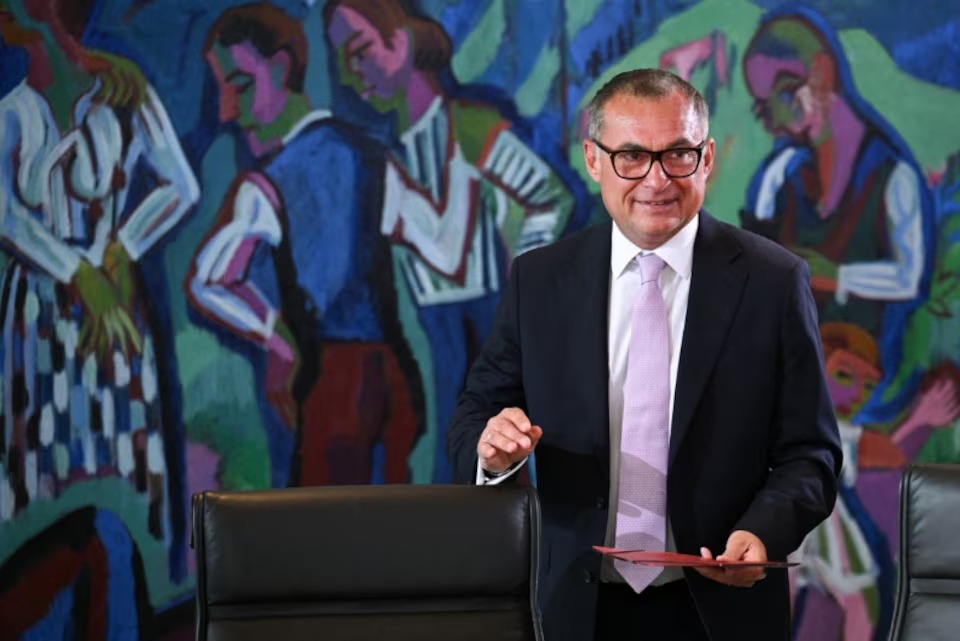
BERLIN, Sept. 10 — Bundesbank President Joachim Nagel said Thursday that he is concerned about the growing influence of far-right parties across Europe, warning that their policies could have broader consequences for Germany’s economy and international investment appeal.
Speaking at a European Central Bank press conference in Berlin, Nagel questioned what the political shift could mean for German society, national values and the country’s economic prospects.
“What does this make with our country, with our society, the values we are sharing? Some of these concepts are self-defeating in an economic sense,” Nagel said.
His comments came after Germany’s far-right Alternative for Germany (AfD) emerged as the leading party in state elections in Saxony-Anhalt on Sunday. The party campaigned on measures including tighter controls on migration and restoring relations with Moscow.
Nagel said a stronger far-right presence could make Germany less attractive to international businesses and investors.
“Is this helpful to attract foreign investors to come to this country? Definitely not,” he said. “I think they will be reluctant, they will shy away from doing business here. So yes, I’m concerned.”
The Bundesbank president’s remarks underscore the potential economic implications of Germany’s changing political landscape, particularly at a time when the country remains reliant on its international business links and ability to attract foreign investment.