

WASHINGTON DC [BE Report]: Boeing has paid a $3.1 million penalty imposed by the U.S. Federal Aviation Administration over a series of safety and regulatory violations, including conduct linked to the 2024 Alaska Airlines 737 MAX 9 emergency.
The FAA said Boeing paid the full amount in January 2026. The payment had not previously been publicly disclosed. Boeing has also confirmed that it paid the penalty.
The enforcement action followed findings that Boeing had interfered with the independence of safety personnel and had submitted two aircraft to the FAA for approval despite the planes being deemed not airworthy.
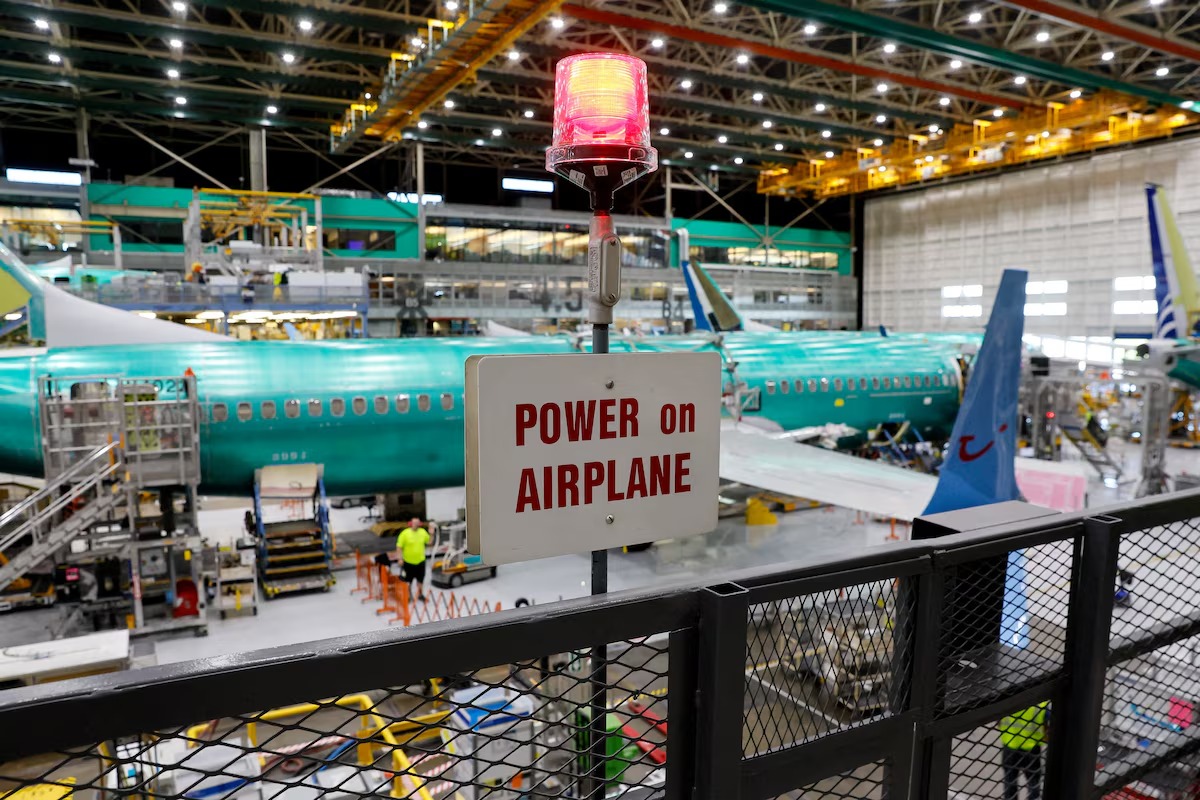
The agency also identified extensive quality-control problems during inspections carried out between September 2023 and February 2024. Hundreds of violations were found at Boeing’s 737 production facility in Renton, Washington, as well as at the Wichita, Kansas, fuselage plant operated at the time by subcontractor Spirit AeroSystems.
Among the findings was an incident in which a Boeing employee pressured a colleague carrying out duties for the FAA to approve a 737 MAX aircraft so the company could maintain its delivery schedule. The employee had determined that the aircraft did not meet applicable regulatory requirements.
The size of the penalty has drawn criticism from lawmakers. Democratic U.S. Senator Richard Blumenthal, who had previously investigated Boeing’s safety practices and chaired a committee examining the Alaska Airlines incident, argued that the fine was insufficient.
“For Boeing, such fines are easily absorbed as the cost of doing business, not a meaningful deterrent to dangerous behavior,” Blumenthal said.
The January 2024 Alaska Airlines incident became a major setback for Boeing’s efforts to restore confidence in its manufacturing and safety processes. A 737 MAX 9 operated by Alaska Airlines experienced a mid-air cabin blowout after four key bolts were found to be missing.
The incident prompted a temporary grounding of the MAX 9 and intensified regulatory scrutiny of Boeing’s production system. The FAA subsequently imposed a monthly production limit of 38 aircraft, a restriction that remained in place until October 2025.
The incident also featured prominently in a congressional investigation, where whistleblowers raised concerns about Boeing’s manufacturing practices.
More recently, the FAA said in July 2026 that Boeing would be permitted to issue airworthiness certificates for all 737 MAX and 787 aircraft following what the agency described as “months of thorough data and safety review demonstrating consistent production quality.”
The fine represents another regulatory consequence for Boeing as the company continues efforts to strengthen manufacturing controls and rebuild confidence in the safety and quality of its aircraft.