


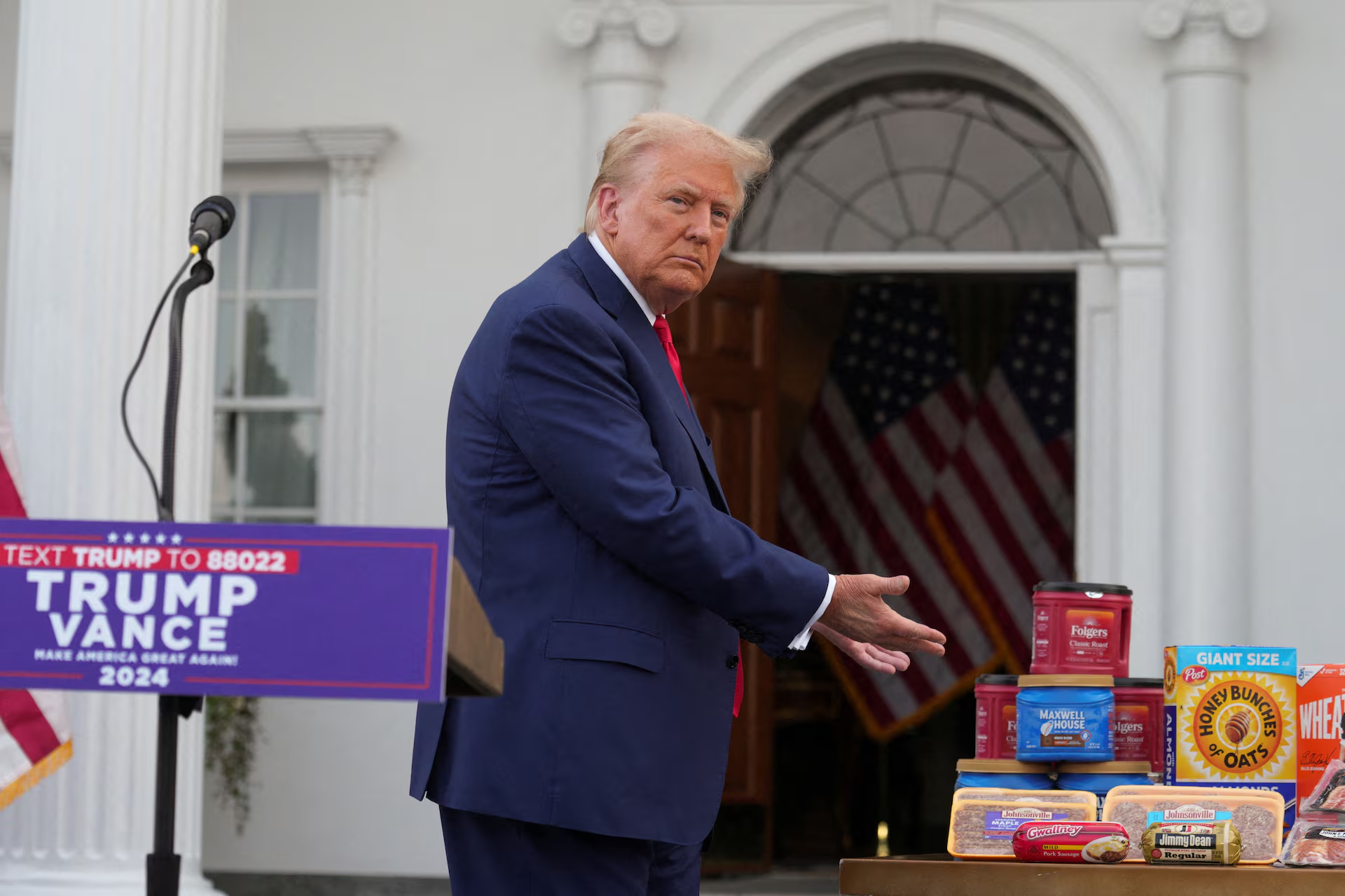
BEDMINSTER (Agency Report): Two years after Donald Trump staged a high-profile campaign event surrounded by grocery staples to highlight inflation, the cost of food remains a central concern for American households and an increasingly difficult political issue for Republicans heading into November’s midterm elections.
During a campaign appearance at his Bedminster, New Jersey, golf club on August 15, 2024, Trump displayed tables filled with everyday essentials—including fruit, cereal, milk, beef and other household items—to argue that inflation under the Biden administration had driven grocery bills sharply higher. The event was designed to contrast his economic message with that of Democratic nominee Kamala Harris while reinforcing his pledge to reduce living costs if elected.
Now, nearly two years into Trump’s second term, grocery and fuel prices continue to strain family budgets, even though inflation has eased significantly compared with previous years. The persistence of higher prices has turned affordability into one of the defining issues for voters and created a challenge for Republicans seeking to defend their congressional majorities.
Recent polling indicates Democrats now hold a slight advantage over Republicans on economic stewardship, marking the first time in nearly a decade that voters have expressed greater confidence in Democrats on the issue.
For many shoppers, the debate is personal rather than political.
Sheila Carney, a 68-year-old Republican voter, recently loaded roughly $70 worth of groceries into her vehicle after shopping near Bedminster. Despite purchasing only a modest selection that included meat, detergent and a 12-pack of iced tea, she said the bill reflected the financial pressures many families continue to face.
“This is real. He can say it’s not, but it is,” said Carney, who works in hospital administration and has postponed retirement while helping repay her son’s student loans. “He hasn’t brought anything down.”
An analysis of 26 grocery categories tracked by the Bureau of Labor Statistics and featured during Trump’s 2024 grocery display found that prices have increased by 3.4% during the first 19 months of his second presidency.
Although that pace is less than one-quarter of the increase recorded over the equivalent period of former President Joe Biden’s administration, it still falls short of Trump’s promise to lower grocery costs. Price increases for products such as coffee, beef and apples have outweighed declines in categories including eggs and butter.
The White House has argued that broader inflation trends point to improving economic conditions. Officials cited July consumer price data showing only a minimal monthly increase, while highlighting falling prescription drug and auto insurance costs, rising real wages, easing beef prices and comparatively lower costs for eggs, poultry and dairy products.
Midterm enthusiasm under pressure
Carney said elevated grocery and gasoline costs—driven in part by the Iran war—have left her questioning whether she will vote in the midterm elections, reflecting broader signs that Republican voters may be less motivated than Democratic voters heading toward November.
She was among 17 Republican and independent voters interviewed in New Jersey’s competitive 7th Congressional District, which includes Bedminster. The closely watched race features Republican Representative Tom Kean against Democratic challenger Rebecca Bennett.
More than half of those interviewed said they were undecided or leaning toward Bennett. While the rising cost of groceries remained a major concern, dissatisfaction with Kean frequently centered on his extended absence from public life earlier this year, which he later attributed to depression.
The findings mirror sentiments expressed by other Trump supporters in recent months. While many continue to back the president, ongoing financial pressures appear to have reduced enthusiasm for voting, increasing the importance of Republican turnout efforts in key battleground districts.
Francesco Trebbi, a public policy professor at the University of California, Berkeley, recently co-authored research showing that Trump performed especially well in the 2024 election in counties where inflation exceeded income growth, reducing household purchasing power.
With real wages increasing only modestly and trailing broader economic growth, Trebbi believes that electoral trend could shift during the 2026 midterms.
“I expect the same anti-incumbent shift to happen in 2026, this time possibly weakening Republicans,” he said, describing grocery shopping as a “psychologically salient” reminder of household financial strain. “Each time one does it, it is the equivalent of a campaign ad against the incumbent.”
Also read: Turkey Damascus SDF integration talks draw senior delegation to Syria