


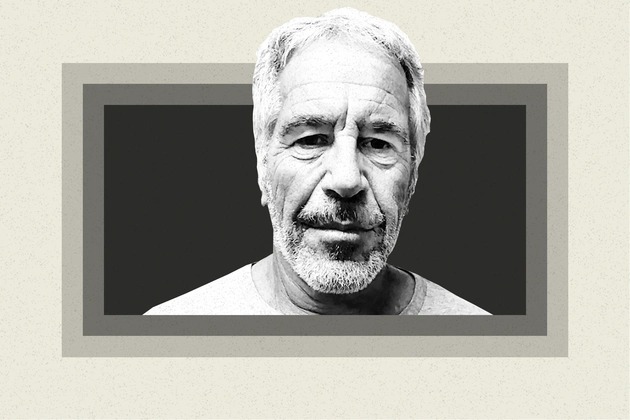
The Jeffrey Epstein case has become one of the most consequential sex-trafficking scandals of the modern era, not simply because of the scale of the abuse alleged against him, but because of the extraordinary social and financial world surrounding him.
For years, Epstein presented himself as a wealthy financier with access to presidents, royalty, technology executives, academics and business leaders. Behind that public image, prosecutors and survivors described a system in which vulnerable teenage girls were recruited, groomed and sexually abused, with some victims allegedly encouraged to bring other girls into the network.
The investigation began in 2005 after the parents of a 14-year-old girl reported that she had been sexually abused at Epstein’s Palm Beach home. What followed was a two-decade-long legal and political reckoning involving controversial prosecutorial decisions, renewed federal charges, the conviction of Epstein associate Ghislaine Maxwell, the release of millions of pages of records and continuing scrutiny of people who crossed Epstein’s path.
Epstein himself died in federal custody in August 2019 while awaiting trial. His death was ruled a suicide. The circumstances surrounding his death have continued to generate debate, while his alleged victims have continued to seek accountability.
The story has also evolved with successive releases of documents. By January 2026, approximately 3.5 million pages connected to the case had been made public following legislation requiring the release of remaining unclassified records. The documents contain testimony, correspondence, travel records, financial material, photographs and other evidence gathered during investigations and litigation.
But the presence of a person’s name in those records is not, by itself, evidence of criminal conduct. Individuals can appear because of social contacts, correspondence, business dealings, witness testimony or references made by others. That distinction is essential when examining a document archive as extensive and complicated as the Epstein files.
WHO WAS JEFFREY EPSTEIN?
Jeffrey Epstein was born in Brooklyn, New York, on January 20, 1953. He never completed a college degree, yet his career advanced rapidly. At 21, he obtained a teaching position in physics and mathematics at the Dalton School in Manhattan before moving into the financial sector.
Epstein subsequently worked at Bear Stearns and later established his own financial management firm. He claimed to work exclusively with billionaires, cultivating an image of exceptional financial expertise and unusual access to wealth.
The origins and structure of his fortune remained difficult to establish publicly, contributing to questions about his business activities and sources of wealth.
His social reach, however, was unmistakable. Epstein accumulated residences in Manhattan, Palm Beach and New Mexico, owned property in France and the US Virgin Islands, and travelled aboard private aircraft. His network extended across politics, finance, academia, entertainment and technology.
That network became inseparable from the criminal allegations against him.
Investigators and prosecutors said Epstein sexually abused and exploited underage girls over many years. A pivotal relationship began in 1991, when he met Ghislaine Maxwell. She would eventually become one of the most important figures in the prosecution’s account of how the abuse network operated.
GHISLAINE MAXWELL’S ROLE
Ghislaine Maxwell, the daughter of British media magnate Robert Maxwell, grew up within an affluent international social environment. After moving through elite circles in Europe and the United States, she developed a close association with Epstein.
According to testimony presented at her federal trial, Maxwell played a role in recruiting and grooming teenage girls for Epstein from the mid-1990s into the early 2000s.
The prosecution’s case described grooming as a process through which girls were made comfortable with inappropriate behaviour before the sexual abuse occurred. Witnesses said Maxwell helped establish trust and normalise conduct that would otherwise have appeared alarming.
Maxwell was arrested in New Hampshire in July 2020 and charged with sex trafficking and conspiracy offences. In December 2021, a New York jury convicted her on multiple charges connected to the trafficking and sexual exploitation of minors.
She was sentenced in June 2022 to 20 years in federal prison.
THE SYSTEM BEHIND THE ABUSE
The allegations against Epstein describe something more organised than isolated encounters.
Teenage girls were often introduced through massage appointments. According to prosecutors and survivors, what began as a paid massage could turn into sexual abuse. Some girls were then offered money to recruit additional teenagers, creating a referral structure that allowed the network to grow.
This method was particularly effective because it relied on existing relationships. A teenager could be introduced by a friend, classmate or acquaintance rather than by an obviously threatening stranger.
Epstein’s wealth also played a role in creating an environment where exploitation could be concealed behind luxury, opportunity and access.
Survivors described being offered money, mentorship or assistance with education. For vulnerable teenagers, particularly those experiencing financial or emotional difficulties, such offers could make Epstein appear trustworthy.
One survivor, identified in court as Jane Doe, described being targeted after her mother’s death and during a period when her family life had deteriorated.
“Epstein targeted and took advantage of me, a young girl, whose mother had recently died a horrific death and whose family structure had deteriorated,” she told a 2019 court hearing. She described the resulting psychological deterioration in deeply personal terms.
Her account illustrates one of the central themes running through survivor testimony: exploitation was not necessarily based on force at the initial point of contact. Trust, money, vulnerability and social familiarity could all become mechanisms of control.
THE 2005 INVESTIGATION AND THE CONTROVERSIAL PLEA DEAL
The first major criminal investigation into Epstein began in Palm Beach in 2005 after the parents of a 14-year-old girl contacted police.
As detectives investigated, additional underage girls came forward with allegations. The investigation eventually raised questions about whether the criminal justice system had adequately responded to the scale of the allegations.
In 2008, under an agreement approved by then-US Attorney for the Southern District of Florida Alexander Acosta, Epstein pleaded guilty in state court to charges involving solicitation of prostitution from a minor.
He received an 18-month sentence but served roughly 13 months, much of it under a work-release arrangement that allowed him to leave custody during the day.
The agreement later became a major source of controversy because it included federal immunity provisions extending to potential co-conspirators.
The case did not disappear after Epstein’s release. He returned to an affluent social environment and continued to interact with prominent people.
Renewed scrutiny eventually came from investigative reporting in late 2018, when the circumstances surrounding the earlier plea agreement and accounts from survivors received extensive attention.
Federal prosecutors in New York charged Epstein in July 2019 with sex trafficking, alleging that he had sexually exploited and trafficked dozens of underage girls between 2002 and 2005.
He never stood trial on those federal charges.
EPSTEIN’S DEATH
On August 10, 2019, Epstein was found dead in his cell at the Metropolitan Correctional Center in Manhattan while awaiting trial.
His death was officially determined to be a suicide.
The finding has nevertheless remained controversial. Michael Baden, a forensic pathologist who observed Epstein’s autopsy on behalf of his family, has argued that the injuries were more consistent with strangulation than hanging.
Such claims have kept the circumstances of Epstein’s death in public debate, even though the official determination remains suicide.
WHAT ARE THE EPSTEIN FILES?
“Epstein files” is a broad term used for the enormous collection of court records, investigative material and other documents associated with Epstein, Maxwell and related investigations.
The records include victim and witness testimony, flight logs, contact books, financial records, photographs, correspondence and material seized from properties in New York, Florida, New Mexico and the US Virgin Islands.
The archive became a major focus of public attention after previously sealed records began to emerge publicly in 2024.
In November 2025, Congress passed the Epstein Files Transparency Act, requiring the US Justice Department to release remaining unclassified records associated with the case. By January 2026, approximately 3.5 million pages had been made public.
The sheer volume of material has created a second challenge: separating evidence of criminal behaviour from incidental references.
A name appearing in a contact book, email, photograph or witness statement does not establish that the person participated in Epstein’s crimes. Some individuals had social or professional relationships with him without being accused of wrongdoing, while others have faced specific allegations or scrutiny.
That distinction is critical in assessing the archive responsibly.
SURVIVORS DESCRIBE RECRUITMENT AND COERCION
Survivor accounts provide some of the clearest descriptions of how Epstein’s recruitment system functioned.
One woman told a grand jury that Epstein hired her at 16 to perform a sexual massage. She subsequently recruited between 40 and 60 other girls, she testified, receiving $200 for each person she brought to him.
She said she generally approached girls she knew from high school and told those who were underage to claim they were 18.
Another survivor, Shawna Rivera, described being introduced to Epstein by a friend who said she could earn $200 for giving him a massage. Rivera had left home and was living independently at the time. She said she was told to undress and was subsequently raped.
Rina Oh described a different dimension of the experience, saying Epstein threatened her with physical violence and disclosed details about conduct overseas.
Other survivors have described physical force.
Chauntae Davies recalled beginning what she believed was a massage before Epstein allegedly grabbed her, pulled her toward a bed and sexually assaulted her despite her repeated objections.
Virginia Giuffre, one of Epstein’s most prominent accusers, said she was trafficked to other men within Epstein’s social circle. She accused former Prince Andrew of sexually abusing her when she was 17 and alleged that Epstein sent her to other powerful men.
The allegations involving Giuffre became among the most prominent elements of the wider scandal.
THE POWERFUL PEOPLE IN THE RECORDS
The release of Epstein-related documents has repeatedly drawn attention because of the prominent names contained within them.
Those records include references to political leaders, members of royal families, technology executives, academics and business figures. But again, the nature of each reference varies considerably.
Andrew Mountbatten-Windsor, the younger brother of King Charles, has faced allegations of sexual exploitation involving a minor and has consistently denied wrongdoing. He was stripped of his royal title in 2025.
Documents also contain correspondence involving Elon Musk dating to 2012 concerning possible travel plans. Musk has said he never travelled to Epstein’s island.
Donald Trump appears thousands of times across the files. Previously released records have included his contact information in Epstein’s address book, flight records and photographs showing the two men together during the 1990s. Trump has denied wrongdoing and has said his relationship with Epstein ended years before Epstein’s first arrest.
Bill Clinton appears in photographs and records connected to Epstein and was photographed with him during the 1990s and 2000s.
Norwegian Crown Prince Mette-Marit exchanged emails with Epstein after his 2008 conviction.
Self-help figure Deepak Chopra appears in correspondence with Epstein dating from after Epstein’s conviction.
Microsoft co-founder Bill Gates is referenced in multiple emails dating from 2013.
Slovakian diplomat Miroslav Lajcak resigned as national security adviser after correspondence involving young women became public. The emails included exchanges dating to 2018, when he was serving as foreign minister.
Google co-founder Sergey Brin appears in records concerning visits to Epstein’s island and plans involving Epstein’s New York residence.
Former Norwegian prime minister Thorbjorn Jagland has been the subject of a criminal investigation into alleged corruption connected to email exchanges with Epstein.
These entries demonstrate both the reach of Epstein’s social network and the complexity of interpreting the documents. Association, communication or appearance in the files must be distinguished from evidence of participation in sexual crimes.
THE PROPERTY NETWORK
Epstein’s properties formed another important part of the geography of the allegations.
At the time of his death, his real estate holdings were estimated at approximately $180 million. Much of that property was subsequently sold.
His Manhattan townhouse at 9 East 71st Street, on the Upper East Side, was sold for about $51 million in 2021 to Michael Daffey, a former Goldman Sachs executive.
Zorro Ranch in New Mexico, near Stanley, was sold in 2023. Several women have publicly alleged that Epstein abused them there when they were teenagers or young adults.
His Palm Beach mansion at 358 El Brillo Way was another major site associated with allegations of sexual abuse. The property was demolished by its subsequent owner in 2021 in an effort to erase the site’s association with Epstein.
Little Saint James, the private Caribbean island widely known as “Epstein Island”, became perhaps the most recognisable location associated with the case. Survivors and investigators described the island as one of the places where sexual abuse and trafficking occurred.
Neighbouring Great Saint James, a larger island Epstein also owned, was another private property connected to allegations involving the exploitation of minors and visits by prominent individuals.
Epstein also owned a luxury apartment at 22 Avenue Foch in Paris’ 16th arrondissement. The property was sold for $10.4 million to Bulgarian packaging entrepreneur Georgi Tuchev.
TRUMP AND THE RELEASE OF THE RECORDS
The continuing release of Epstein records has produced a particularly striking political dimension for Donald Trump.
Trump authorised the release of additional files, after which his own name appeared repeatedly within the material.
The records add to a history of documented contact between Trump and Epstein. Trump has acknowledged knowing Epstein socially but has said their relationship ended before Epstein’s first arrest.
In 2002, Trump described Epstein as a “terrific guy.” Epstein later claimed that he had known Trump for approximately a decade.
Trump has denied any involvement in Epstein’s crimes. The White House has said Trump severed ties because of Epstein’s behaviour, while other accounts have linked their falling-out to a dispute involving real estate in Florida.
INDIAN CONNECTIONS IN THE DOCUMENTS
The Epstein records have also drawn attention in India because of references to Indian politicians, business figures and public personalities.
Union Minister Hardeep Singh Puri addressed his association with Epstein after the issue was raised by Rahul Gandhi in Parliament.
Puri said he met Epstein three or four times as part of an International Peace Institute delegation and maintained that the interactions were professional. He said his former boss at the organisation, Terje Rod-Larsen, knew Epstein and that his own meetings with Epstein occurred in that professional context.
Other Indian names appearing in released documents include businessman Anil Ambani, wellness figure Deepak Chopra, filmmaker Mira Nair and filmmaker Anurag Kashyap.
Emails involving Chopra and Epstein released previously included a 2016 reference to “younger, intellectually sharp and self-aware women.” Chopra has denied involvement in criminal or exploitative conduct.
Mira Nair’s name also surfaced in an email concerning a 2009 social event at Ghislaine Maxwell’s townhouse. The disclosure generated controversy around her son, New York State Assembly member Zohran Mamdani, who was heckled over the reference.
As with other names appearing in the archive, inclusion in an email or event record does not in itself establish participation in Epstein’s crimes.
A ROYAL ARREST AND A NEW PHASE OF SCRUTINY
The Epstein investigation entered another extraordinary phase on February 19, when former Prince Andrew was arrested amid an investigation into alleged misconduct connected to Epstein.
He became the first senior member of the modern British Royal Family to be arrested.
After approximately eight hours of questioning, he was released under investigation. Police searches continued at Royal Lodge the following day.
The development was particularly significant because of Andrew’s long-standing connection to Giuffre.
Giuffre alleged that Andrew sexually abused her when she was 17. Andrew has denied the allegations. The two settled a civil lawsuit in 2022 without an admission of liability.
Giuffre died by suicide in April at the age of 41.
Following Andrew’s arrest, her family welcomed the investigation and said they were grateful to police for pursuing the case. Their statement described the development as significant for survivors seeking accountability.
A CASE THAT CONTINUES TO EXPAND
Jeffrey Epstein is dead. Ghislaine Maxwell is serving a 20-year federal sentence. Yet the investigation and public examination of the network surrounding them continue.
The publication of millions of pages has not produced a simple explanation of Epstein’s world. Instead, it has created an enormous documentary record requiring careful examination of dates, relationships, testimony and allegations.
For survivors, the central issue remains the abuse itself and the question of accountability. For investigators and courts, the challenge is to distinguish substantiated evidence from association, allegation and speculation.
The Epstein case therefore remains unresolved in a broader sense. The criminal proceedings against Epstein ended with his death, but the documentary, legal and institutional consequences of his conduct continue to unfold.