

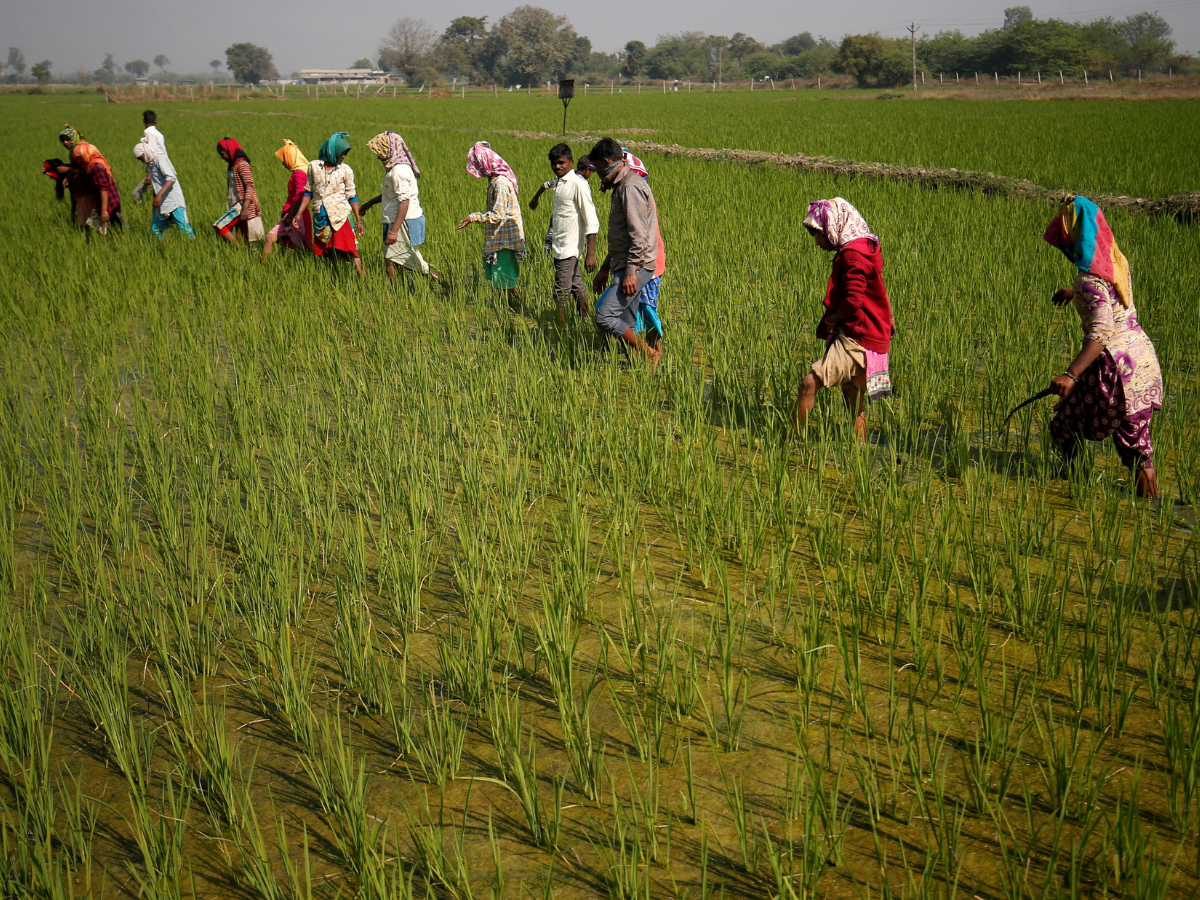
NEW DELHI (Business Emerge): India recorded a significant expansion in rice shipments during the latest fiscal year, reinforcing its position in global food trade while water tables in major producing regions continued to decline. The increase in output and exports has coincided with rising dependence on groundwater for irrigation, particularly in northern farming belts, where growers report deeper extraction and higher operating expenses linked to rice cultivation.
The development has been most visible in Punjab and Haryana, two states that form the core of India’s rice supply chain. Farmers in these regions rely largely on groundwater rather than canals or surface reservoirs. Cultivation practices and procurement systems have kept rice acreage high, even as local water availability has tightened. Government data and academic research indicate that groundwater levels in many districts have fallen to depths that were not common a decade ago.
India shipped more than 20 million metric tonnes of rice in the most recent fiscal year, nearly double the volume recorded ten years earlier. The country now accounts for about 40 percent of global rice exports. Official records also show that the state-backed minimum support price for rice has increased by roughly 70 percent over the past decade. Power subsidies for agriculture have reduced the cost of pumping water, encouraging continued reliance on borewells in water-stressed zones.
Historical data from farmers and agricultural institutions show that groundwater in parts of Punjab and Haryana was accessible at about 30 feet below ground level around ten years ago. In many locations, borewells now extend between 80 and 200 feet. Government classifications place large areas of both states in the over-exploited or critical category. Annual groundwater extraction exceeds natural recharge by an estimated 35 percent to 57 percent, based on recent assessments.
Rice production requires large volumes of water compared with several alternative crops. Studies indicate that producing one kilogram of rice in India consumes between 3,000 and 4,000 litres of water, which is higher than global averages. Farmers report that weak monsoon recharge in some years further increases dependence on pumping, even when seasonal rainfall is adequate. Costs related to deeper drilling, longer pipes, and higher-capacity pumps have added to cultivation expenses.
The expansion of India rice exports has implications beyond domestic agriculture. With a large share of international trade tied to Indian supply, any constraints on production affect global availability and pricing. At the same time, continued groundwater depletion poses risks to long-term farm viability, rural incomes, and regional water security. Smaller growers face greater exposure as incremental costs reduce margins, while larger landholders are better positioned to manage infrastructure investments.
Authorities in some regions have taken limited steps to address the imbalance between crop choice and water use. Haryana introduced a per-hectare incentive in 2023 to encourage farmers to shift from rice to less water-intensive crops such as millets. The support, offered for a single season, has seen limited uptake. In Punjab, local administrations have restricted new borewells in zones identified as critically stressed, aiming to slow further depletion.
Available data suggest that changes to subsidy allocation could alter farmer decisions without increasing overall spending. Studies show that current fertilizer and power subsidies for rice cultivation in Punjab average around 39,000 rupees per hectare. Redirecting a portion of this support toward alternative crops could help maintain farmer incomes while reducing water use. Adoption, however, depends on assured procurement and price support mechanisms similar to those in place for rice.