

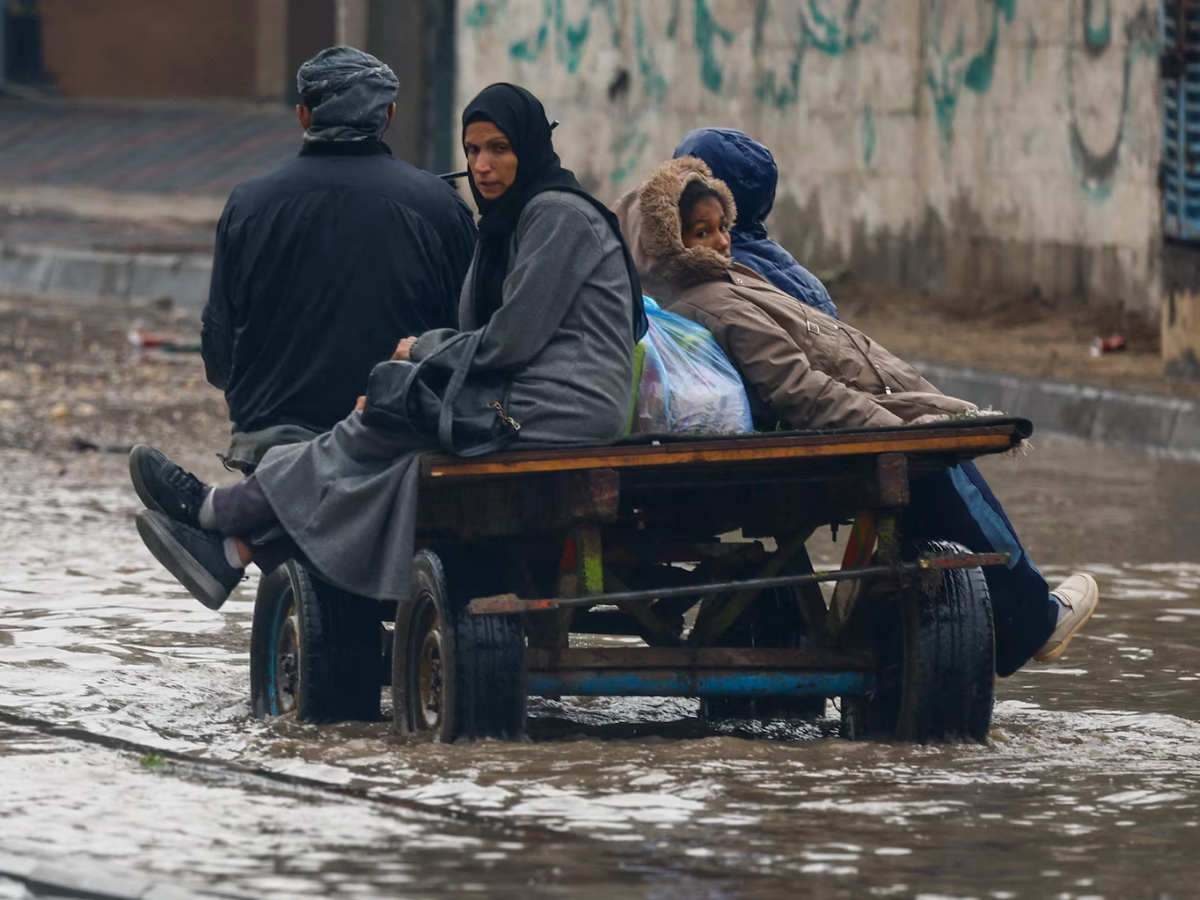
JERICHO (Business Emerge/Middle East): Hundreds of thousands of people living in temporary camps in Gaza Floods areas are confronting renewed flooding risks after heavy rainfall swept through several sites this week. Humanitarian teams reported that many shelters were unable to withstand the weather, leaving families exposed to cold conditions.
Humanitarian officials in Geneva said the rainfall began on Thursday and quickly filled tents and makeshift structures occupied by families displaced during the conflict. Local medical workers reported that one infant died after prolonged exposure to the harsh weather inside a flooded shelter. Aid workers noted that people living in low-lying sections of the territory were particularly vulnerable.
Current assessments indicate that nearly 795,000 displaced residents are staying in locations prone to water accumulation. Many of these areas contain damaged infrastructure, rubble, and limited drainage systems, creating conditions that increase the likelihood of waterborne illnesses. Humanitarian monitors stated that the absence of basic waste management systems further raises health-related concerns for the population.
Relief agencies reported delays in the entry of materials required for weatherproofing shelters. Items such as wood, plywood, sandbags, and water pumps remain held up due to access restrictions. These supplies are typically used to reinforce fragile structures and redirect water away from living spaces. Officials said the lack of these materials has made it harder for families to safeguard their belongings and maintain safe sleeping areas.
Authorities in Israel have stated that they are meeting their humanitarian responsibilities and have raised concerns about distribution challenges inside the enclave. Humanitarian groups, however, reported that many of the items already delivered, including waterproof tents, thermal blankets, and tarpaulins, were not built to endure the intensity of the recent storm. Aid officials said families were attempting to create barriers with limited available resources as they awaited additional support.
The broader situation in Gaza remains strained. Although a ceasefire has largely held since October, much of the region’s infrastructure has been damaged. This has left large segments of the population dependent on temporary accommodation. According to humanitarian and local authorities, roughly 1.5 million people remain displaced, and approximately 300,000 additional tents are needed to manage the current shelter shortfall.
The ongoing shelter challenges are expected to influence relief operations throughout the winter months. Further rainfall could increase health risks and make it more difficult for responders to access certain zones. Aid groups noted that the need for reinforced structures, drainage tools, and sanitation solutions is becoming increasingly urgent.
Humanitarian planners said that upcoming decisions on access permissions will determine how quickly additional supplies can reach the area. If further restrictions persist, relief groups may need to adjust their operational plans and prioritise high-risk zones. Additional weather events could also prompt new displacement or force repeated relocations within camps.